Buying guide5 min read
How old is that egg? A buyer's guide to a market nobody dates
Most eggs sold in Nigerian markets carry no collection date at all. Here is what that costs you, and the three questions that tell you what you are actually buying.
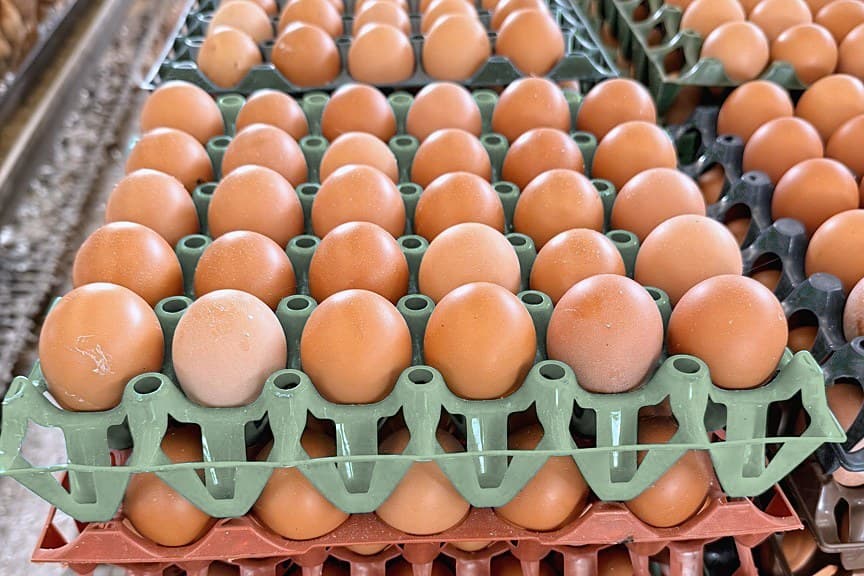
Walk into almost any market in Rivers State and buy a crate of eggs, and you will not be told when they were laid. Not because anyone is hiding it — because nobody recorded it. The crate may have left a farm three days ago or three weeks ago, and by the time it has passed through two middlemen there is no one left who knows.
That matters more than most buyers realise. An egg loses quality steadily from the moment it is laid: the white thins, the yolk flattens, and the air cell grows. None of that makes it unsafe for a long while, but it changes how it behaves. If you run a restaurant or a bakery, it changes your product.
The three questions worth asking
- When was this collected? If the seller cannot answer, they are reselling, not producing — which is fine, but price it accordingly.
- How was it stored between collection and now? Heat is what ages an egg fastest. A crate that sat in the sun for a day has aged more than one that spent a week in shade.
- How consistent is the size within the crate? Wide variation usually means eggs from multiple flocks of different ages have been mixed together.
The float test, and what it actually tells you
Put an egg in a glass of water. A fresh egg lies flat on the bottom. As it ages, the air cell grows and the blunt end lifts. When it stands fully upright, it is old. When it floats clear of the bottom, discard it.
This is a useful check, but it is a diagnosis after the fact. The better answer is to buy from somewhere that simply tells you the date — which is why every crate that leaves our gate carries one.
Why we collect twice a day
Eggs left sitting in the cage are exposed to heat and to contact. Collecting twice daily rather than once shortens that exposure, reduces breakages, and means the crate you receive was gathered in a single morning rather than accumulated over a day and a half. It costs us a second round of labour. It is the cheapest quality gain available to a layer farm.